

When Confidentiality Becomes National Overreach in Data Center Development


Confidentiality has a valid place in business. No serious company should have to expose true trade secrets, private project details, or protected technical methods just because a market is competitive.
But confidentiality can cross a line.
Real Innovative Capital received a formal cease-and-desist from BrightShift Renewables concerning our continued GIS activity and assets developed during the course of that relationship. BrightShift’s letter alleges unauthorized use of confidential information and proprietary methodologies. It demands, among other things, removal of content, identification of recipients and transactions, and an accounting of related activity.
We dispute that position. BrightShift has every right to protect information it can specifically establish as confidential or proprietary; our disagreement concerns the scope of what it now claims those protections cover.
This post is informational commentary, not legal advice. The point is broader than one letter, one former relationship, or one disagreement. Across the United States, a much larger fight is developing around data centers, infrastructure development, confidentiality agreements, transparency, and corporate control.
Federal lawmakers are now investigating the use of nondisclosure agreements and and overreach around data-center development. Congress has also seen legislation introduced that specifically targets data-center NDAs. Multiple states have considered or advanced measures that would limit confidentiality agreements tied to large data-center projects.
That national attention did not appear out of nowhere.
Communities, developers, landowners, utilities, and smaller market participants are asking a harder question: Is confidentiality being used only to protect legitimate proprietary information, or is it being used to control who can participate in the market?
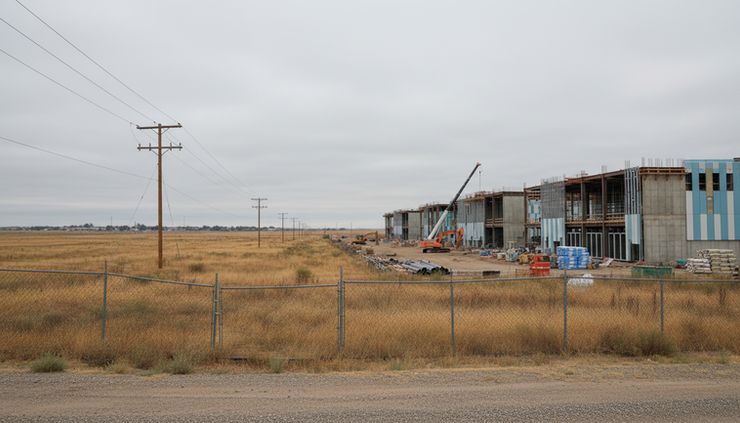
Data Center Overreach: The Line Cannot Be Left Undefined
A nondisclosure agreement can serve a clear purpose. It can protect sensitive site plans, customer information, pricing, engineering details, financing terms, and technology that a company actually owns.
That protection makes sense.
The problem begins when confidentiality language gets stretched beyond that purpose. A private agreement should not become a tool to block independent work, suppress lawful competition, or claim ownership over ideas and assets that were not exclusively created or controlled by one party.
There is a difference between protecting a trade secret and attempting to control who can participate in a market.
There is a difference between protecting confidential project information and demanding control over independently developed infrastructure.
There is a difference between preserving proprietary technology and attempting to dictate what another business can build after a relationship ends.
Those differences matter because data center development now affects far more than private balance sheets. These projects can influence land use, electric grid planning, water demand, tax incentives, transmission buildout, zoning decisions, and local economic strategy. When secrecy surrounds that activity, the public may lose sight of who benefits, who carries risk, and who gets kept out.
That is why the issue has become national.
The phrase When Confidentiality Becomes National Overreach in Data Center Development is not just a headline. It describes the growing concern that private confidentiality claims can spill into public consequences.
The BrightShift dispute shows how a private demand can raise public questions
The BrightShift letter concerns GIS activity and assets that Real Innovative Capital continued to use after the relationship ended. BrightShift alleges that this activity involved confidential information and proprietary methodologies. We dispute that claim.
Our position is straightforward: businesses can and should protect true confidential material. But no company should be able to recast independently developed GIS assets, infrastructure strategy, or market activity as off-limits simply because a prior relationship existed.
GIS work is especially important in this debate.
Geographic information systems are used across infrastructure development to analyze land, transmission access, substations, fiber routes, constraints, zoning, parcel data, and other project factors. Some inputs may be private. Many others come from public records, utility filings, county data, state databases, satellite imagery, landowner research, and independent analysis.
The line between protected information and independent work cannot be blurred casually.
If one company can claim broad control over post-relationship infrastructure activity by pointing to vague confidentiality concerns, the result can chill legitimate development. Smaller firms may hesitate to pursue projects. Landowners may receive fewer options. Communities may hear from fewer participants. Markets may narrow, not because the best project won, but because legal pressure discouraged others from acting.
That is the danger.
A cease-and-desist letter is not a court ruling. It is a demand. Sometimes demands are valid. Sometimes they are too broad. Sometimes they are used to create pressure before facts are tested.
BrightShift has a right to assert its position. Real Innovative Capital has a right to dispute it. The public also has a right to understand why fights like this matter beyond the two names on a letter.

Data center secrecy is now a national policy issue
Data centers are no longer quiet industrial projects tucked into the background. They are major energy users and major infrastructure anchors. Their growth can reshape utility planning and local development for years.
That makes secrecy harder to justify when it affects public decision-making.
According to publicly available congressional materials on GovInfo, federal lawmakers have examined concerns about nondisclosure agreements in data-center development. Congress has also seen legislation aimed at restricting data-center NDAs. At the state level, lawmakers have looked at ways to limit confidentiality agreements connected to large data-center projects.
The common concern is clear: public bodies should not be forced to make major infrastructure decisions while key facts are hidden behind private confidentiality claims.
This does not mean every project detail belongs in the public domain. True trade secrets still deserve protection. Security-sensitive information should be handled carefully. Land negotiations can require discretion.
But secrecy should not become a blanket.
When data center projects depend on public power capacity, tax treatment, zoning approval, water access, road upgrades, or transmission planning, the public interest grows. Local officials, residents, and competing developers may need enough information to assess the real impact.
That includes basic questions such as:
How much power could the project require?
What public incentives or infrastructure support are involved?
What land-use changes are being requested?
What obligations are public agencies being asked to accept?
Who is being prevented from speaking, competing, or sharing relevant information?
Those questions are not anti-business. They are basic governance.
If a confidentiality agreement prevents meaningful public review, then it no longer functions only as a shield for private information. It becomes a barrier between infrastructure decisions and the people affected by them.
Overbroad confidentiality claims can hurt smaller firms and local communities
Large infrastructure markets already favor parties with capital, legal teams, utility relationships, and long timelines. Smaller firms often compete by moving faster, finding overlooked sites, building better local knowledge, or developing stronger geospatial analysis.
Broad confidentiality claims can threaten that role.
A company that receives an aggressive demand letter may face a difficult choice. Fight, settle, stop working, or avoid the market altogether. Even when the company believes it did nothing wrong, the cost and uncertainty can be enough to slow activity.
That chilling effect matters.
A healthy infrastructure market needs more than one voice. It needs independent site analysis. It needs multiple developers testing project assumptions. It needs landowners who can compare options. It needs communities that can see more than one version of the future.
When confidentiality becomes too broad, several harms can follow:
Independent work gets treated as suspicious
A firm may build its own maps, models, relationships, and project strategy, then face claims that the work must have come from confidential material.
Public data gets pulled into private control
Information from county records, transmission maps, zoning materials, and other public sources may be swept into a claim if the boundaries are unclear.
Former partners become permanent gatekeepers
A past relationship may be used to argue that future activity in the same market is improper, even when the work stands on its own.
Communities hear fewer perspectives
If legal pressure silences smaller firms, local leaders may only hear from the best-funded parties.
That is not competition on the merits. It is control through risk.
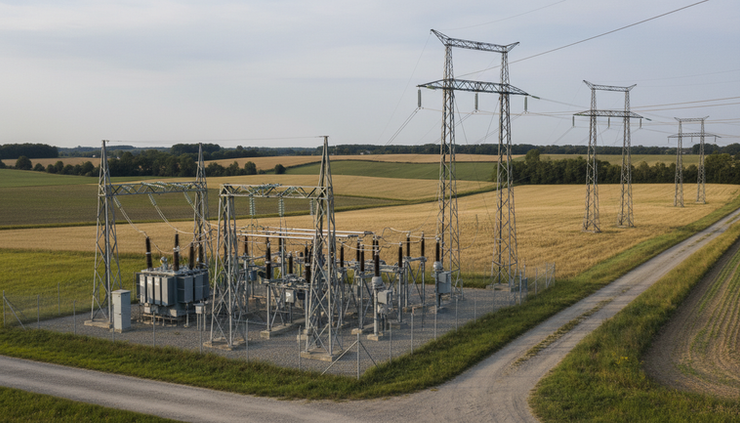
The real test is whether the claim is specific
A serious confidentiality claim should be specific. It should identify what information is protected, why it qualifies for protection, how it was allegedly used, and what harm resulted.
Broad accusations are not enough.
In infrastructure work, this distinction is vital because many people can reach similar conclusions from the same public facts. If a parcel sits near transmission, has industrial zoning potential, and appears suitable for large-load development, more than one analyst may identify it. That does not automatically prove misuse of confidential information.
Likewise, GIS methods often involve standard categories of analysis. Teams may review parcels, grid access, environmental constraints, topography, roads, fiber, water, permitting pathways, and ownership patterns. Some workflows may be proprietary. Many are common across infrastructure development.
A claim should not turn an entire field of work into private property.
Specificity protects both sides. It allows legitimate secrets to be defended. It also prevents companies from using vague claims to pressure others into surrendering lawful activity.
For Real Innovative Capital, the distinction is central. We reject the idea that continued GIS activity and independently developed assets can be broadly controlled through allegations alone. BrightShift may assert its view. We will assert ours.
The broader market should care because this issue will not stop with one dispute. As data-center demand grows, fights over land, power, maps, models, and relationships will grow with it.
Transparency does not destroy business value
The strongest argument for strict confidentiality is that infrastructure projects need privacy to succeed. Early-stage development can be fragile. Land positions can collapse if details leak. Competitors can copy a strategy. Utilities and communities may not be ready for public attention.
That concern is real.
But transparency does not require publishing every sensitive detail. The policy question is not whether all information should be open. The question is where to draw the line.
A better standard would protect legitimate confidential material while rejecting confidentiality that blocks public oversight or fair competition.
That balance could include:
Clear definitions of protected information
Time limits tied to actual project needs
Exceptions for public records and independently developed work
Limits on NDAs involving public agencies and elected officials
Disclosure of major public impacts, even when project details remain protected
Fair processes for challenging overbroad claims
This approach would not punish companies for protecting real secrets. It would prevent secrecy from becoming a private veto over public infrastructure choices.
Data centers are too important for that.
A project that may affect grid planning, land use, tax policy, and local resources cannot be treated like a purely private transaction from start to finish. The public does not need every spreadsheet. But it does need enough information to understand the stakes.
Real infrastructure growth requires fair competition
The United States needs serious infrastructure development. Data centers, power generation, transmission, storage, and digital systems will shape economic capacity for decades.
That growth will require private capital. It will require confidentiality in some settings. It will also require trust.
Trust breaks down when confidentiality is used too broadly. It breaks down when public agencies cannot speak clearly. It breaks down when landowners and communities cannot understand what is happening. It breaks down when smaller firms believe that independent work can be challenged simply because it competes with a former partner.
A stronger market does not come from silencing participants. It comes from clear rules.
Protect trade secrets. Respect contracts. Defend true confidential information.
At the same time, reject attempts to control public data, independent analysis, post-relationship business activity, and infrastructure participation through vague or oversized claims.
That is the line Real Innovative Capital believes matters in the BrightShift dispute. It is also the line now taking shape in statehouses, congressional records, and local debates across the country.

The line cannot be left undefined
Confidentiality should protect what is truly confidential. It should not become a weapon against independent work, market participation, or public accountability.
The BrightShift letter is one example of a larger national issue. As data-center development expands, more companies, communities, and lawmakers will face the same basic question: where does legitimate protection end, and where does overreach begin?
That line must be drawn clearly.
If it is not, the future of infrastructure development will be shaped less by merit, transparency, and public need, and more by whoever can make the broadest private claim first.



Comments