

Nvidia, Claudeforce, and the New AI Infrastructure Race

AI is moving from promise to plumbing. The clearest signal this week did not come from a model demo or a flashy chatbot release. It came from infrastructure numbers, enterprise integrations, cyber findings, and new rules for evaluating frontier models.
Nvidia reported fiscal Q2 revenue of $96.2 billion, up 106% year over year. Its Data Center business reached $89.0 billion, up 117%, and the company guided to roughly $108 billion next quarter. Those figures point to something bigger than a hot hardware cycle.
AI compute is becoming an industrial layer.
At the same time, Salesforce and Anthropic launched Claudeforce, connecting Claude directly to Salesforce data, workflows, business logic, actions, and governance. Anthropic also published new evidence that frontier models are becoming serious cyber-research tools. Google DeepMind introduced a double-blind evaluation system for a proprietary frontier model, aimed at benchmark contamination.
Together, these moves show where the AI race is heading next. The center of gravity is shifting from standalone chatbots to systems that can act inside real infrastructure.

AI infrastructure is becoming the new competitive moat
Nvidia’s results are the cleanest read on AI demand because the company sits close to the physical bottleneck. If major cloud providers, model labs, and enterprises want more AI capacity, they need chips, networking, servers, and data-center systems. Nvidia sells into that pressure point.
A fiscal quarter with $96.2 billion in revenue would be remarkable for almost any technology company. The detail that matters most is the Data Center segment. At $89.0 billion, it now dominates Nvidia’s business. That is not a side bet. It is the business.
The year-over-year growth rates are also important:
Metric | Fiscal Q2 result | Year-over-year change |
Total revenue | $96.2 billion | Up 106% |
Data Center revenue | $89.0 billion | Up 117% |
Next-quarter guidance | About $108 billion | Not applicable |
These numbers make one thing hard to ignore. AI capital spending is still accelerating.
The early AI boom was often discussed as speculation. Cloud providers were buying capacity ahead of demand. Startups were raising money to train larger models. Enterprises were experimenting with copilots. That phase still exists, but the scale has changed.
When compute spending reaches this level, the question becomes less about whether AI is real and more about where the return shows up. The answer is starting to appear in several places:
Model training and inference at large cloud providers
Enterprise AI assistants connected to business data
Code generation and software maintenance
Cybersecurity research and vulnerability discovery
Scientific, financial, and industrial workloads
Internal automation across support, sales, engineering, and operations
That does not mean every AI project will pay off. Many will not. But the infrastructure buildout is no longer only a bet on future use cases. It is increasingly tied to workloads that already produce revenue, reduce labor hours, or create new products.
Claudeforce points to the real enterprise AI product
Salesforce and Anthropic’s Claudeforce launch may matter more than another general-purpose model update. Claude is being wired into Salesforce data, workflows, business logic, actions, and governance, beginning with 37 prebuilt sales skills. Claude is also becoming the default model across Slack.
That tells a clear story about enterprise AI.
The winning product is less likely to be a blank chat window. It is more likely to be an AI agent connected to live business systems, restricted by permissions, and allowed to take defined actions.
A standalone chatbot can answer questions. A connected model can inspect a customer record, draft the next message, update a field, summarize an account history, trigger a workflow, and route the result to the right person. The difference is not only intelligence. It is access.
Claudeforce puts the model closer to the work.
That matters because most enterprise knowledge does not live on the open web. It sits inside CRMs, support systems, data warehouses, documents, tickets, contracts, Slack channels, and approval chains. A model that cannot reach those systems may sound smart but remain operationally weak.
For companies, the key questions now look different:
What data can the model see?
What actions can it take?
Who approved those actions?
How are outputs logged?
Can sensitive records be protected?
Can the system explain why it acted?
What happens when the model is wrong?
These are governance questions, but they are also product questions. Enterprise buyers do not only want AI that can talk. They want AI that can complete work without creating uncontrolled risk.

The chatbot era is giving way to permissioned action
The first wave of generative AI adoption trained people to ask better questions. The next wave will train organizations to define better permissions.
That is a major shift.
A model connected to Slack and Salesforce can sit close to customer conversations, deal data, account notes, support escalations, and internal decisions. With the right limits, that can save time and improve consistency. With weak controls, it can expose private information or take actions that are hard to unwind.
This is why governance is not a back-office feature. It is part of the product itself.
A useful enterprise AI system needs at least four layers:
Layer | What it controls |
Data access | Which records, messages, and documents the model can read |
Action rights | What the model can create, edit, send, or trigger |
Audit history | Who requested an action, what the model did, and when |
Human review | Which tasks require approval before completion |
Claudeforce is interesting because Salesforce already sits inside many of these control points. It stores structured customer data. It manages workflows. It reflects roles and permissions. It already has governance concepts that enterprises understand.
Anthropic brings Claude. Salesforce brings the system of record.
That pairing shows why AI infrastructure is not only silicon and data centers. It is also identity, permissions, workflow state, and audit trails. The model needs somewhere to act, and the enterprise platform supplies that environment.
This is where Nvidia, Claudeforce, and the New AI Infrastructure Race come together. Compute makes the model possible. Enterprise software gives it context. Governance decides whether it can be trusted with real work.
Anthropic’s cyber data shows discovery is getting cheaper
Anthropic’s vulnerability-disclosure dashboard adds another piece to the picture. According to the company, Claude-based systems have identified 26,153 candidate findings, with 2,300 vulnerabilities disclosed across 392 open-source projects and 421 patched upstream as of August 26.
Those figures do not mean every AI-generated finding is valid. The phrase “candidate findings” matters. Security research still requires validation, triage, responsible disclosure, fixes, and maintainers who can review changes.
The important signal is where the bottleneck appears to be moving.
Finding suspicious code paths used to be one of the hardest parts of vulnerability research. AI systems are getting better at scanning large codebases, spotting risky patterns, reasoning across files, and drafting explanations. If that continues, the scarce resource may shift from discovery to human validation and remediation.
That creates both upside and risk.
The upside is clear:
More bugs can be found before attackers exploit them.
Open-source maintainers can receive more detailed reports.
Security teams can test more code with limited staff.
Small projects can benefit from research capacity they could not afford before.
The risk is also real:
Maintainers may be flooded with low-quality reports.
Attackers can use similar tools to search for exploitable flaws.
AI-written remediation may introduce new bugs.
Disclosure queues can grow faster than teams can process them.
This is not a reason to stop using AI in security. It is a reason to build better intake systems, validation workflows, and patch review processes. If discovery gets cheaper, the rest of the security pipeline must improve.

Google DeepMind is treating evaluation as infrastructure
Google DeepMind’s new double-blind evaluation system for a proprietary frontier model targets a problem that has become harder to ignore: benchmark contamination.
As models train on vast amounts of text and code, benchmark material can leak into training data. When that happens, a high score may not show true reasoning ability. It may show that the model has seen the answers, or something close to them, before testing.
DeepMind’s system uses cryptographically secured environments so models cannot see benchmark material ahead of evaluation. That sounds technical, but the business point is simple. AI buyers, regulators, researchers, and model builders all need more confidence that test results mean what they claim to mean.
This matters more as model scores converge. If several frontier models appear close on common benchmarks, trust becomes a differentiator. Not just trust in safety policies, but trust in measurement.
Evaluation is becoming part of the competitive stack.
The same pattern has happened in other industries. Financial markets need audits. Pharmaceuticals need clinical trials. Aviation needs certification. These processes are imperfect, but they create shared methods for judging risk and performance.
AI is still early in building its version of that trust layer. Double-blind testing is one part of it. Provenance, secure benchmark handling, third-party audits, red-team results, and real-world task evaluations will also matter.
When models can act in business systems, write software, discover vulnerabilities, and influence decisions, weak evaluation becomes a serious operational risk.
Nvidia is becoming a capital allocator
Nvidia is no longer just the company selling chips into the AI boom. It is also becoming a capital allocator across the AI ecosystem.
That role matters. Nvidia’s investments and partnerships can shape which model companies, infrastructure providers, data-center projects, energy suppliers, and startups get oxygen. The company benefits when AI demand expands, but it can also help build the demand it later serves.
This creates a powerful loop:
Nvidia sells compute to cloud providers, labs, and enterprises.
Those buyers use compute to build AI services.
AI services create more demand for inference and training.
More demand drives new data-center investment.
Nvidia backs parts of the ecosystem that increase future compute use.
That loop does not guarantee unlimited growth. Data centers face physical limits. Power availability, cooling, grid connections, permitting, and chip supply all matter. Customers also need to prove that AI spending creates value.
Still, Nvidia’s position is unusual. It sits at the intersection of hardware, software, networking, developer tools, and investment. That gives it influence well beyond the GPU.
It also raises strategic questions. If one company becomes central to both AI supply and AI ecosystem financing, partners and competitors will watch closely. Cloud providers want access to Nvidia systems, but they also want pricing power and strategic independence. Model labs need compute, but they may not want too much dependence on a single supplier. Governments want domestic AI capacity, but they also care about supply-chain control and energy demand.
The AI infrastructure race is now about more than who has the best model. It is about who can secure the full stack.
What this week’s moves say about the next phase of AI
The common thread across these announcements is that AI is becoming more physical, more embedded, and more accountable.
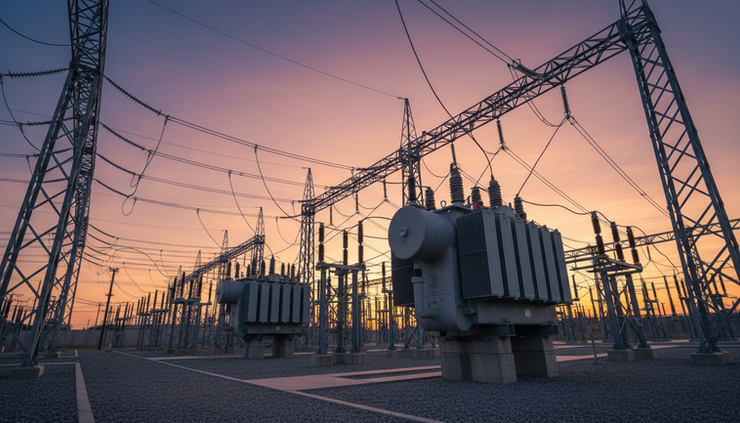
Nvidia’s results show the physical layer. Training and inference need chips, networking, data centers, cooling, and power. The spending is large because the workloads are large.
Claudeforce shows the enterprise layer. Models gain value when they connect to live systems, respect permissions, and complete defined tasks.
Anthropic’s cyber data shows the capability layer. Frontier models are not only writing copy or summarizing documents. They are finding flaws in real code, which changes the economics of security research.
Google DeepMind’s evaluation work shows the trust layer. As AI systems gain more responsibility, tests must become harder to contaminate and easier to verify.
Taken together, these moves point to a more mature phase of AI competition. The next winners will not be chosen by model quality alone. They will need compute access, enterprise distribution, secure integrations, clear governance, reliable evaluation, and enough power to keep the machines running.
That is why the AI race feels different now. It is less like a software launch cycle and more like the buildout of a new industrial system.
The near-term question is not whether AI will keep advancing. The harder question is whether the infrastructure around it can advance at the same pace. Compute must scale. Power must arrive. Enterprise controls must hold. Security teams must absorb AI-generated findings. Benchmarks must earn trust.
The companies that answer those questions will define the next phase of AI. The rest will still have demos, but demos are no longer the main event.



Comments